What Makes a Shower ADA Compliant? A Guide for Dayton Homeowners
What Is an ADA Compliant Shower?
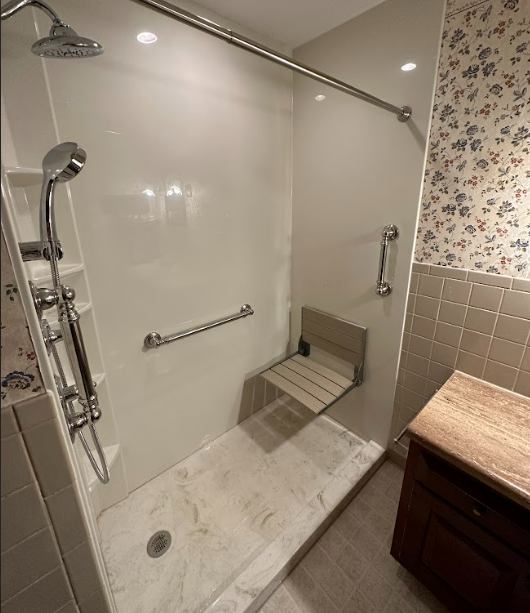
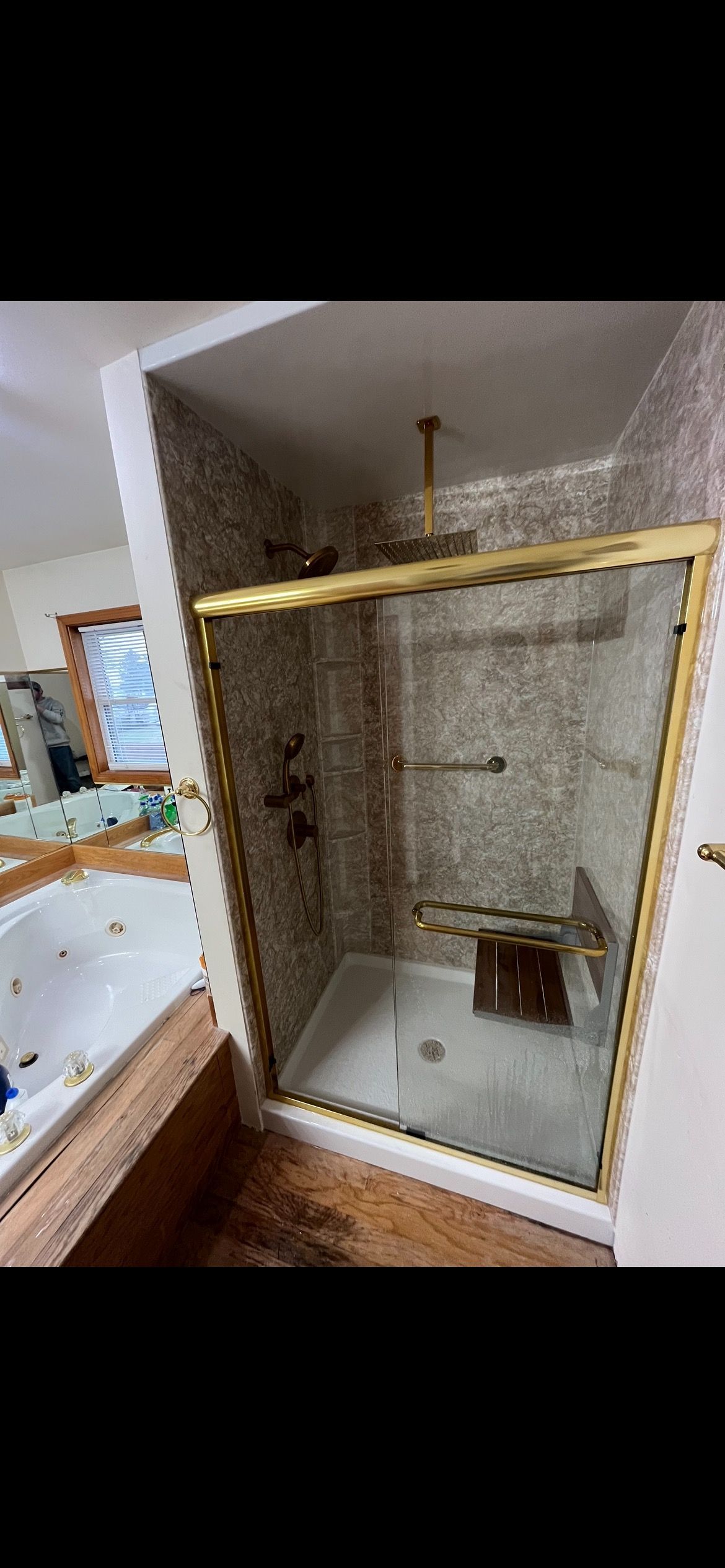
Understanding ADA Shower Requirements
ADA shower requirements provide a framework for building showers that are fully accessible and accommodate people with various mobility challenges. They prevent accidents due to their safety features, ease of entry, and placement of fixtures, and provide reassurance for users with mobility issues.
- Shower Type
Two types of ADA‑compliant showers are available: roll‑in and transfer‑type. Roll‑in showers provide open access for wheelchairs. Transfer‑type showers have a built-in seat for a user to move from their wheelchair to the bench. Choosing the best shower type depends on the user’s mobility level, but both prioritize safety and ease of use for independent bathing.
- Dimensions
ADA guidelines are designed with specific interior dimensions to ensure users have enough space to safely turn, transfer, and reach fixtures. The roll-in type of showers need to be wide enough for wheelchairs, while transfer-type showers are slightly smaller but still need to be carefully measured to include space for seats. Proper dimensions ensure each shower is accessible and functional.
- Shower Entrance
An ADA‑compliant shower entrance has to be level with the bathroom floor without obstructions and to allow the user to roll in and enter without lifting their feet, or navigating a step, and to prevent them from tripping. To ensure safe, independent access, users need a smooth, barrier-free entry into the shower.
- Grab Bars
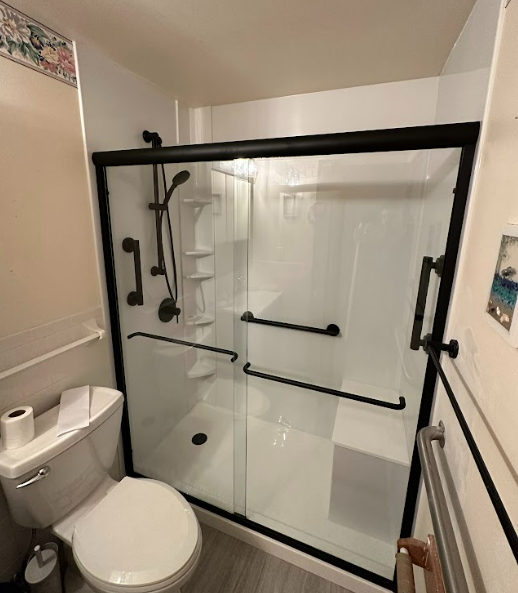
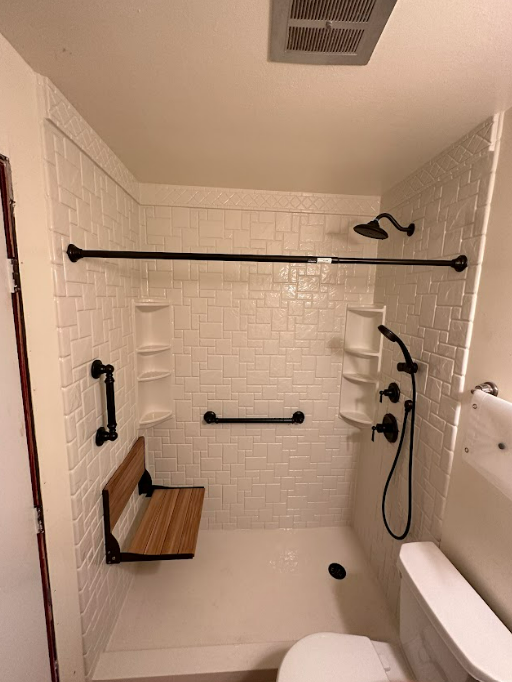
To comply with ADA guidelines, grab bars have to be installed along shower walls to give users reliable support when they’re transferring and while standing. They need to be easily accessible, support the user’s weight, and be positioned at certain heights to provide stability and to reduce the chance of slips and falls.
- Shower Seat
Built-in or fold-down shower seats are required in ADA‑compliant transfer‑type showers, but are optional in roll‑in showers. They offer safe and comfortable seated bathing while reducing the risk of fatigue and falls. They should be firmly mounted so users can easily access controls and grab bars.
- Controls and Fixtures
Shower controls need to be reachable whether the user is seated or standing up. Controls for temperature and water flow shouldn’t need to be twisted or gripped tightly because this can be unsafe and cause frustration for users.
- Flooring and Drainage
Slip-resistant shower floors that have traction even when wet are required to ensure compliance with ADA regulations. They’re important because they reduce the risk of falls and accidents. For proper drainage, they should ensure water flows away quickly to prevent slippery spots, pooling, or standing water to maintain safety.
- Clear Floor Space
Wheelchairs need a clear, open space outside the shower so they can approach and turn. This allows users to maneuver their mobility device safely when entering and exiting the shower.
Can You Make An Existing Shower ADA Compliant Without a Full Remodel?
It’s possible to make an existing shower ADA-compliant without completely renovating your bathroom. Some homeowners start with practical additions by adding grab bars, adding sturdy shower seating, adjusting the height of fixtures, or installing a handheld showerhead to make their shower more accessible for the user. While structural changes might still be needed for full handicap shower remodeling and ADA compliance, small upgrades can make your shower safer.
How to Ensure Your Shower is ADA Compliant
If you want to ensure your shower follows required ADA standards, you need a trustworthy, knowledgeable
shower remodeler in Dayton
to help you achieve it. Bath Creations can evaluate your current layout, identify any potential hazards, and recommend the best upgrades to ensure your shower is safe. We can install low-threshold entries, place fixtures at the correct height,